Secure Attachment
You feel comfortable with intimacy and independence
Estimated prevalence: ~50-60% of adults
Not sure if this is your style? Take the free quiz →
What Is Secure Attachment?
People with a secure attachment style feel comfortable with emotional closeness and are confident in their relationships. You can depend on others and let others depend on you without excessive worry or discomfort.
Key Signs of Secure Attachment
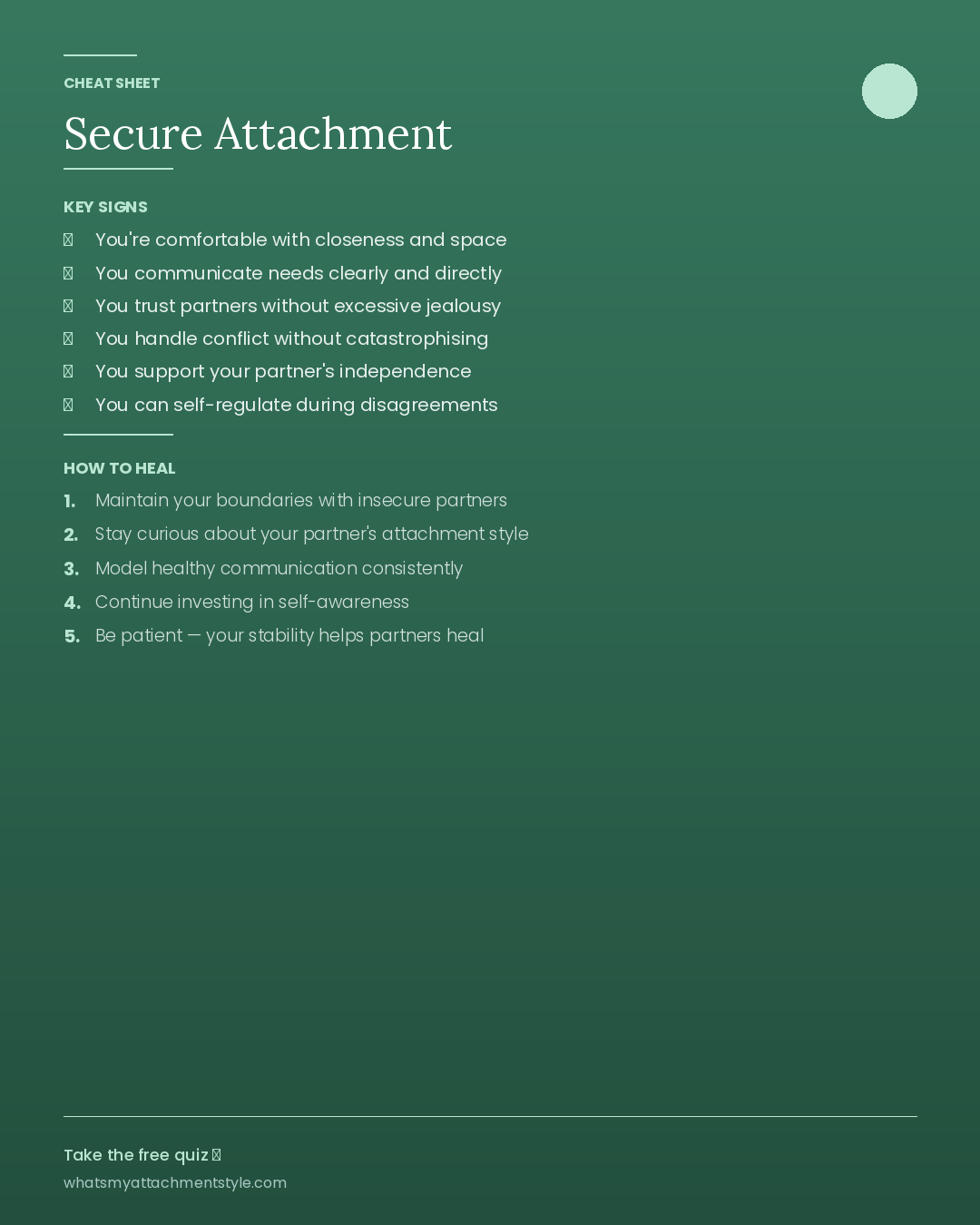
- Comfortable with intimacy and independence
- Good at communicating needs and boundaries
- Trusting of partners without excessive jealousy
- Able to regulate emotions during conflict
- Supportive and responsive to partner's needs
Secure Attachment in Relationships
In relationships, you tend to be warm, stable, and emotionally available. You can handle disagreements without catastrophising and are able to give your partner space without feeling threatened.
What Causes Secure Attachment?
Secure attachment develops when caregivers are consistently responsive, attuned, and available. You learned that expressing needs leads to them being met, that people are generally trustworthy, and that you are worthy of love. This doesn't mean your childhood was perfect — it means your emotional needs were met reliably enough to build a stable internal model of relationships.
Common Challenges
Even securely attached people can face challenges. You might sometimes attract partners with insecure attachment styles, which can test your patience.
How to Heal Secure Attachment
Your secure base means you're well-positioned to support a partner who's working through their own attachment wounds. Focus on maintaining your boundaries while being compassionate.
Practical Steps
- Maintain your boundaries: Your natural warmth can sometimes lead to overextending yourself for a partner with an insecure style.
- Stay curious, not frustrated: If your partner has an insecure attachment style, try to understand their behaviour through the lens of their history.
- Model healthy relating: Your consistent, calm presence is therapeutic for partners working toward earned security.
- Continue growing: Even secure attachment benefits from ongoing self-awareness and intentional communication.
Save & Share This Guide
Screenshot this cheat sheet and share it with someone who needs it.
Want to explore this with a professional?
Talk to a Licensed Therapist
Online therapy can help you understand your attachment patterns and build healthier relationships.
Affiliate link — we may earn a commission at no extra cost to you.
Our Book
What's My Attachment Style?
The complete guide to understanding your attachment patterns and building healthier relationships.
Related Scenarios
View all 0+ scenarios →Understand Other Styles
Compatibility
Anxious + Secure
PromisingA secure partner can help an anxious partner feel safe enough to develop earned security over time.
Avoidant + Secure
PromisingA secure partner can provide the space an avoidant needs while modelling healthy vulnerability.
Fearful-Avoidant + Secure
HealingA secure partner can provide the consistent safety a fearful-avoidant needs to begin healing.
Secure + Secure
EasiestThe gold standard. Both partners communicate well, handle conflict maturely, and support each other's growth.
Key Resources
Take the Attachment Style Quiz
Discover your style in 5 minutes with our free quiz.
What's My Attachment Style? — The Book
The complete guide with exercises, scripts, and a 30-day programme.
Recommended Books on Attachment
Our top picks for deeper understanding.
Therapy for Attachment Issues
How professional support can accelerate your healing.
What's Your Attachment Style?
Take our free 5-minute quiz to discover your attachment style and get personalised insights.
Take the Free Quiz →